
IEX, promoted by Financial Technologies, will be a pan India neutral and transparent electronic demutualized exchange for efficient price discovery in the electricity market. PTC India Ltd has consented to take 26 per cent stake in IEX.
"Sooner or later, a greater part of our businesses will surely be taken up by the exchange, a more transparent platform," said a senior official from PTC India Ltd, the country's largest power trading company that accounts for about a quarter of the total volume of electricity traded in the country. Interestingly, PTC is one of the co-promoters of the exchange. Another major player in the power trading sector, NTPC Vidyut Vyapar Nigam Ltd, has confirmed similar apprehensions
The exchange, Indian Energy Exchange (IEX), received bids for 13,176 Mwh of power when operation commenced and the transaction took place in the price range between Rs 6.46/kwh and Rs 8.01/kwh. Power will be delivered on Saturday as IEX is trading a day ahead currently.
Indian Energy Exchange will start training in operations and online trading for its members soon.
Indian Energy Exchange Ltd, a joint venture of Financial Technologies (India) Ltd and Multi Commodity Exchange, could be just one step away from getting approval to set up the country's first power exchange.
NTPC and NHPC, which together own a third of India's electricity generation, have roped in state-owned power sector financing firm, Power Finance Corporation for the joint venture along with TCS. "We (referring to NTPC and NHPC together) are the largest power generators and we hope to create a market for this," said NTPC Chairman and Managing Director R S Sharma.

If we really want to curb the further depreciation of the rupee and make the rupee appreciate, we want to come out of the mindset that the exchange rate is merely a number, bring policy corrections to help reduce the outflow of foreign exchange by imposing suitable tariffs to discourage imports and bring self reliance, discipline FPIs, and correcting rules governing royalty outflows, suggests Dr Ashwani Mahajan, National Co-Convenor, Swadeshi Jagaran Manch.
Jayant Deo, an expert in energy sector has been promoting the concept of power exchange, a common platform for buying and selling power under Electricity Act 2003. His efforts have been fruitful and India's first power exchange will go Live in the first quarter of 2008.

India's hydropower generation has been significantly constrained in July due to the El Nio effect, which has weakened the southwest monsoon and reduced reservoir levels. This decline, following a 21 per cent year-on-year drop in June 2026, is forcing greater reliance on coal generation and straining grid flexibility amidst rising power demand.

The harsh truth is that the US is no longer a reliable partner, cautions Ramesh Menon.

Notwithstanding the economic complementarities and the host of agreements for deepening economic relation on a host of areas, both sides share common viewpoints on the foreign policy domain and seek common grounds to serve as a counterweight to China, notes Dr Rajaram Panda.

India's first hydrogen-powered train, to be flagged off by Prime Minister Narendra Modi from Haryana's Jind railway station on Friday, is equipped with multi-layer safety systems capable of detecting hydrogen leaks, heat, flames and smoke.

Indian benchmark indices Sensex and Nifty experienced a significant tumble in early trade, primarily driven by heavy selling in HDFC Bank following its quarterly earnings and a sharp spike in Brent crude oil prices due to escalating tensions between the US and Iran. Track Sensex, Nifty
A Monaco-based fuel technology company, FOWE Eco Solutions, claims its patented Cavitech fuel emulsion technology can help industries slash fuel consumption, reduce emissions, and improve equipment performance by using water.
A Monaco-based fuel technology company, FOWE Eco Solutions, claims its patented Cavitech fuel emulsion technology can help industries slash fuel consumption, reduce emissions, and improve equipment performance by using water in fuel.
A Monaco-based fuel technology company, FOWE Eco Solutions, claims its patented Cavitech fuel emulsion technology can help India reduce fuel consumption, emissions, and improve equipment performance by using water in a fuel-oil-water emulsion.
This is the time for India to plan forward fully, with the goal of Atmanirbharata, and energy security. The Persian Gulf is no longer a reliable source, points out Rajeev Srinivasan.

US President Donald Trump lauded Prime Minister Narendra Modi's 'calm, cool, killer' persona at the G7 leaders' lunch in France, underscoring the deeply strategic relationship and formidable diplomatic skills of the Indian leader ahead of their crucial bilateral meeting.

'In all these years of rupee depreciation, of rising oil prices, of inflation caused by import dependence, not one leader had the courage to look the people in the eye and say: Please do this for your country.'

While power utilities and traders have generally welcomed the Central Electricity Regulatory Commission's draft regulations on renewable energy certificates (RECs), they have warned that the short supply of renewable energy (RE) may encourage speculative activity and volatility in the already tight market.

Gwadar is viewed as a critical pearl in China's maritime strategy as it would give a permanent logistical footprint near an important choke point - the Strait of Hormuz and the oil rich Persian Gulf, explains Commodore Venugopal Menon (retd).

Indian stock market benchmark indices, Sensex and Nifty, experienced declines in early trade due to escalating tensions between the US and Iran, which led to a surge in crude oil prices and weak global equity trends.

Indian equity benchmark indices Sensex and Nifty declined in early trade, driven by persistent concerns over the unresolved US-Iran situation and continued outflows from foreign institutional investors.

National Security Advisor Ajit Doval called for decisive action against terrorism and said there cannot be 'double standards' in the fight against it, while addressing an international security forum in Russia.

India secured a 4-1 victory against Canada in their opening Group A tie of the Thomas Cup Finals, with wins from Ayush Shetty and the doubles pair Satwiksairaj Rankireddy and Chirag Shetty.

'You have seen the retrenchments by big corporates in the IT industry because they are not getting enough offers.' 'MSMEs in the manufacturing sector are really struggling. They do not know what to do. They are not able to predict what will happen tomorrow.'
The U.S. Department of Justice has permanently dropped all criminal charges against Indian tycoon Gautam Adani and his nephew Sagar, bringing a high-profile securities and wire fraud case in New York to a close after prosecutors concluded they could not sustain the allegations.
Indian equity benchmark indices Sensex and Nifty experienced a significant tumble in early trade, with the Sensex tanking nearly 700 points, driven by uncertainty surrounding US-Iran negotiations, a fresh spike in crude oil prices, and persistent foreign fund outflows.
The US Department of Justice has permanently dropped all criminal charges against Indian tycoon Gautam Adani and his nephew Sagar, concluding a high-profile securities and wire fraud case in New York after prosecutors determined they could not sustain the allegations.

'Every year we import approximately $70 billion worth of gold -- closer to $72 billion in 2025-2026, an all-time record.' 'There is no parallel for this anywhere in the world. And this love for gold will not disappear overnight.'

'I cannot imagine that any NSA before Ajit Doval would have given us this kind of time and this kind of engagement. They would have offered slogans, or nothing at all. That, too, tells you something.'

Petrol and diesel prices have been increased by Rs 3 per litre each, marking the first hike in over four years, as state-run fuel retailers pass on some of the impact from surging global crude prices, which have been exacerbated by the Iran war.

Petrol and diesel prices in India have been increased by Rs 3 per litre each, marking the first rate hike in over four years. This decision follows a period of stable prices during recent state elections, despite rising global crude oil prices and significant losses for fuel retailers.
Indian equities on Dalal Street saw volatility as global market trends and oil price hike impacted investor sentiment. Track Sensex, Nifty50 movement and key market drivers for Apr 23, 2026.

Commodity markets, especially the metals, are among the most volatile segments of the Indian financial ecosystem. To traders involved in commodity trading, it is not only helpful to keep track of the daily price changes but also necessary to make informed trading decisions. Commodities like gold, silver, copper, and aluminium react to many different factors, which makes it imperative for commodity traders to watch out for metal prices every day.

Gautam Adani and Sagar Adani are seeking the dismissal of a US Securities and Exchange Commission (SEC) securities fraud lawsuit, arguing that the case represents an impermissible extraterritorial application of US law and fails for lack of personal jurisdiction.

A US judge has granted Gautam Adani's request for a hearing to dismiss a US Securities and Exchange Commission (SEC) fraud case, with Adani's legal team arguing the case lacks jurisdiction and credible evidence.

Eighteen new-age technology firms went public during the year, a near triple increase from the five firms that debuted in 2023 and 38 per cent more than 2024's tally of 13.

Indian stock markets experienced a significant rally following the announcement of a US-Iran ceasefire, coupled with a drop in crude oil prices. The Sensex and Nifty both closed nearly 4 per cent higher, mirroring gains in global markets.
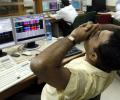
Indian benchmark indices Sensex and Nifty experienced a sharp decline in early trading due to escalating tensions in the Middle East, driving crude oil prices higher. Global market bearishness and foreign fund outflows further contributed to investor unease.
